Micro-Repair After a Tough Meeting: 3-Minute Scripts
Sep 4, 2026 • 9 min
You just left a meeting that went sideways.
Maybe someone snapped. Maybe a client was blunt. Maybe you left feeling hollow, angry, embarrassed, or oddly drained. Those feelings don’t evaporate the second the call ends. They linger—cold coffee at your desk, fuzzy focus, and a creeping urge to avoid reading your inbox.
Here’s the thing: you don't always need a 30-minute walk or a therapy session. Sometimes you need 180 seconds that stop the spiral and get you back to work without carrying the meeting’s emotional hangover into everything else.
I call it the Micro-Repair Ritual. It’s three short moves: label the moment, do a paced exhale loop, then take one tiny repair action. The scripts below are for managers and individual contributors (ICs). I’ll show you what I do, why it works, and how to make it feel real instead of performative.
Why micro-repairs matter (and why they work)
Small ruptures at work—an edge in someone’s tone, a heated pushback, or an awkward silence—add up. Left unaddressed, they degrade trust and attention. Research on emotion and decision-making shows that unresolved emotional arousal impairs executive function and focus[1]. That’s why a short, intentional reset helps: it reduces the emotional intensity, engages your regulatory system, and redirects your brain toward an achievable next step.
Labeling the feeling activates the thinking part of the brain and calms the reactive part. Slow exhalations stimulate the vagus nerve and increase heart-rate variability, signaling safety. And a tiny action restores agency—one small completed task breaks the rumination loop.
Put together, these three micro-moves are fast, discreet, and cumulative. Do them often enough and your team culture shifts: people recover faster, stay more present, and handle conflicts without the afternoon-long residue.
The ritual in 180 seconds
Do this right after the meeting. Stand up, close your laptop, or step into the hallway. The ritual is short because timeliness is the point.
Step 0: Get off the screen for the duration. Even two steps away changes your body posture and mindset.
Step 1 — Label the Moment (30–45 seconds) Say (out loud or under your breath) a short, specific sentence that names what happened.
- For ICs: “That last segment felt dismissive. I’m frustrated and a little defensive.”
- For Managers: “That escalated quickly. I felt protective of the team and that cut through the room.”
Don’t editorialize. Stick to the feeling. That precise naming calms the limbic system and creates space to choose what to do next.
Step 2 — Paced Exhale Loop (75–90 seconds) A modified 4-2-7 breathing loop: inhale 4, hold 2, exhale 7. Repeat 4 times.
If you need discretion, do the breathing while walking. Focus on the long exhale—this is the physiological trick. The extended exhale increases parasympathetic tone and lowers adrenaline, which helps you shift from reactive to reflective[2].
Here’s a one-sentence shared script you can use if you want everyone to join: “Let’s take a breath together—one in, longer out. Two more.”
Step 3 — Tiny Repair Action (30–45 seconds) Do one small, concrete action that reorients the meeting’s energy. Keep it tiny. The goal is forward motion, not perfect resolution.
- For ICs: “I’ll send a one-paragraph follow-up with the clarified ask.” Or: “I’ll redline that slide and share it.”
- For Managers: “I’ll send a quick note to realign expectations and acknowledge the heat. We’ll regroup on process.”
Finish with a neutral reframe: “This highlights a process gap we can fix,” not “We failed.” The reframe moves the focus from personal worth to practical steps.
Scripts you can actually use (word-for-word)
I kept these short so you can say them fast and sound human.
For Managers (when you want to model repair):
- “That got tense. I felt protective of the team—thanks for staying in it. Let’s take two breaths and then list one small next step.”
- After breathing: “I’ll send a 3-line recap and next step in 10 minutes so we’re aligned.”
For ICs (when you want to reset and keep accountability):
- “That was hard to hear. I’m going to breathe for a moment and then draft the clarifying note.”
- After breathing: “I’ll share the outline in the chat and can incorporate quick feedback.”
For virtual meetings (discreet, camera-on or off):
- “Real quick—let’s take a collective breath.” Pause. “Okay—one tiny action: who will own the follow-up?”
Use whichever fits your voice. If it feels stiff, shrink it. The point is specificity and timing, not theatricality.
A real story: how I learned to do this the hard way (and why you should practice)
A few years back I led an all-hands where two senior people publicly disagreed over priorities. Voices rose. I tried to mediate but stayed too long in the “fix it now” mode. After the call I sat back down and opened my laptop to work. Thirty minutes later I was exhausted, my inbox felt like a mountain, and I made a sloppy email asking for status updates that sounded curt.
Two teammates replied defensively. The tension extended the whole afternoon and bled into the next day’s sprint planning. I realized later that my failure wasn’t the disagreement—it was my failure to reset the room and my own system immediately afterward.
So I started experimenting. The next time things got heated, I stood up, walked to the window, and spent 90 seconds on the breathing loop. I then sent a two-sentence note: “Thanks for the candor. I’ll email a quick summary and proposed next step in 15 minutes.” That simple follow-up changed everything. People stopped replaying the argument, and the conversation moved from blame to logistics.
What I learned: timing matters more than eloquence. If you wait until you’re back at your desk, the cognitive residue is already baked into your decisions. If you do something short and intentional immediately, you preserve clarity and relationships.
A micro-moment that stuck with me
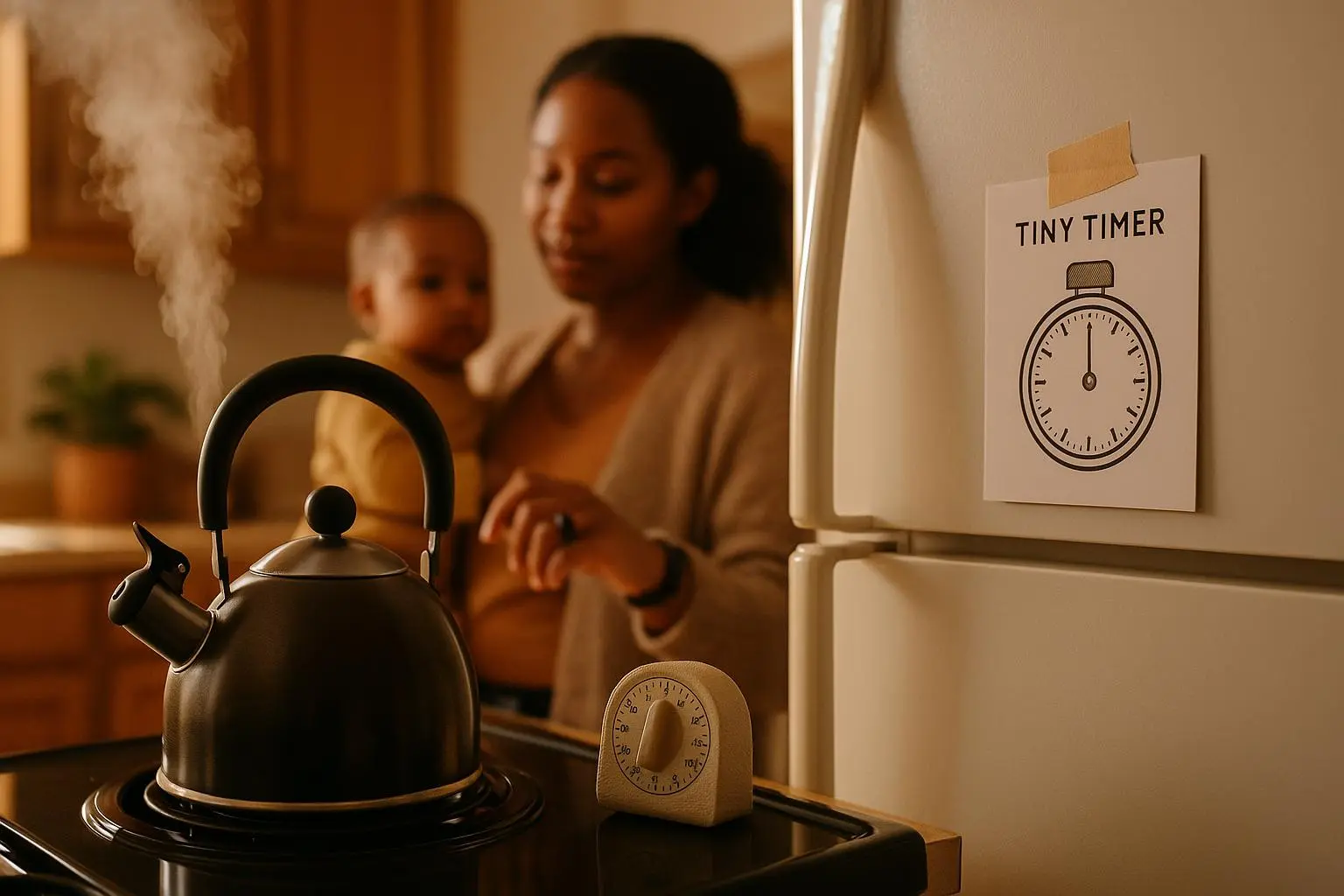
After one intense review, I made tea while breathing. The steam on my face and the kettle’s hiss made the breaths feel less clinical—more human. That little sensory anchor makes the breathing loop stick for me.
Common objections (and honest answers)
“I’ll just bottle it up—reframe feels fake.”
- That’s valid. Reframing can feel performative right after being attacked. Make the repair action truly tiny and practical—draft an outline, send a clarifying sentence. The action creates authenticity; it shows you’re doing something concrete.
“What if I seem weak taking a breath in front of others?”
- It’s a leadership signal, not a weakness. Managers who model recovery make it safer for others to do the same. If you’re self-conscious, step into a hallway or mute while you breathe.
“I don’t have time.”
- You have 180 seconds. Treat it like a quick code commit or a stretch after a long drive. The time you save by avoiding rumination will pay off.
When to use the ritual—and when to go deeper
Use micro-repair for immediate, acute recovery: heated debates, sharp feedback, or the low-grade stress that makes you unproductive.
Don’t use it as a substitute for real conflict resolution. If the issue is systemic—abuse, repeated disrespect, structural problems—micro-repair won’t fix the underlying cause. It buys time, clarity, and composure to do the harder work that follows.
If the same rupture keeps repeating, escalate to a longer, facilitated conversation. Use micro-repair to prevent the spiral that makes those deeper conversations harder.
Making this sticky for teams
If you’re a manager, model it publicly once. Say, “That was intense—three minutes.” Do the breathing and the follow-up action. People notice behavior more than policy.
Try these small rituals to normalize repair:
- Start meetings by reminding everyone: “If this gets heated, we’ll do a two-minute reset.”
- Add a “micro-repair” item to your meeting template for post-mortems.
- Encourage simple follow-ups: short recap emails, one-sentence acknowledgements, or a quick parking-lot action.
Over a month, teams report fewer lingering side conversations, fewer misdirected emails, and faster recovery from conflict. The cost is negligible; the payoff is steadier attention and less burnout.
Tools and tweaks (if you want to go deeper)
You don’t need an app, but these can help:
- A timer app for a discreet 90-second chime.
- Headspace or Calm for guided 3-minute SOS exercises.
- A small ritual object (a mug, a pen) as a cue when you step away.
Movement helps too. Walking while you breathe, stretching your shoulders, or getting water adds a physical cue that reinforces the mental reset.
Quick troubleshooting
If people ignore your follow-up:
- Shorten the follow-up even more. One line. One question. Ask for a single confirmation.
If breathing feels useless:
- Double-check the exhale. Make it longer. The magic is in the long exhale.
If reframing feels dishonest:
- Reframe to a process, not a person. “This shows we need clearer ownership” is easier to say than “We handled this badly.”
The long game: why tiny repairs build durable teams
Micro-repairs are small, but habits compound. A culture where people recover quickly and get back to work reduces churn, preserves psychological safety, and keeps attention on outcomes instead of grudges. Emotional regulation becomes a shared muscle, not an individual burden.
Do it enough and people stop seeing conflict as a catastrophe. They see it as data. They learn faster. Meetings get shorter. Decisions get clearer.
And you? You get a little more calm in your day and a little less cognitive residue when you sit down to focus.
References
Footnotes
-
Lerner, J. S., Li, Y., Valdesolo, P., & Kassam, K. S. (2015). Emotion and Decision Making. Annual Review of Psychology. Retrieved from https://www.annualreviews.org/doi/abs/10.1146/annurev-psych-010814-015239 ↩
-
Gerritsen, R. J. S., & Band, G. P. H. (2018). Breath of Life: The Respiratory Vagal Stimulation. Frontiers in Human Neuroscience. Retrieved from https://www.frontiersin.org/articles/10.3389/fnhum.2018.00397/full ↩