Getting Started with Personal Breath Metrics: Build Your First N-of-1 Breathing Study
Aug 18, 2026 • 9 min
If you’re tired of one-size-fits-all health advice, you’re not alone. The real value in this stuff isn’t the general tips; it’s learning what actually moves your own needle. That starts with a simple idea: you test what works for you. Not what “the science says” for a population, but what the your own body says in real life.
This is a practical, get-started guide to running your first N-of-1 breathing study. You’ll learn how to pair a tiny breathing intervention with a couple of easy metrics, and you’ll walk away with ready-to-use CSV templates you can start using today.
Before we dive in, one quick truth I learned the hard way: you don’t need a lab to get useful feedback. You just need a plan you can actually follow, and a way to look at the data without getting lost in the numbers. Let me walk you through how I did it (and what I’d change if I did it again).
A quick memory from my own setup: I started with a 7-day baseline, then 14 days of a simple breathing routine, and I logged mood, energy, sleep, and that morning HRV reading when I woke up. I wasn’t chasing perfection. I was chasing a real signal that might tell me whether a tiny daily habit was worth keeping.
Micro-moment: the first time I wrote out my CSV, I caught myself overcomplicating it. I pared it down to three subjective questions and two objective metrics. And suddenly, data collection felt effortless, not like a chore.
Why breath metrics matter (in plain terms) Breathing isn’t just about oxygen or blowing out candles. It’s a direct lever on your nervous system. Slow, deliberate breathing—think 4-7-8 or coherent breathing—can shift your body from a stressed, racing state to a calmer, more focused one. The effect isn’t magical; it’s physiological: lower sympathetic arousal, higher parasympathetic activity, and better heart rate variability (HRV) readings when you measure it consistently over time [1]. In plain terms, you can see which breathing patterns actually help you recover after a tough day, improve sleep, or steady your nerves before a big presentation.
The power of the N-of-1 approach Traditional studies give you averages. And averages are useful for understanding broad trends. But they don’t tell you what happens to you. With an N-of-1 study, you’re the subject, the researcher, and the data analyst all in one. The goal is to identify a breathing technique that reliably improves your own sleep, mood, energy, or focus. It’s medicine that you personalize, rather than a treatment that’s tested on someone else and then prescribed to you [2].
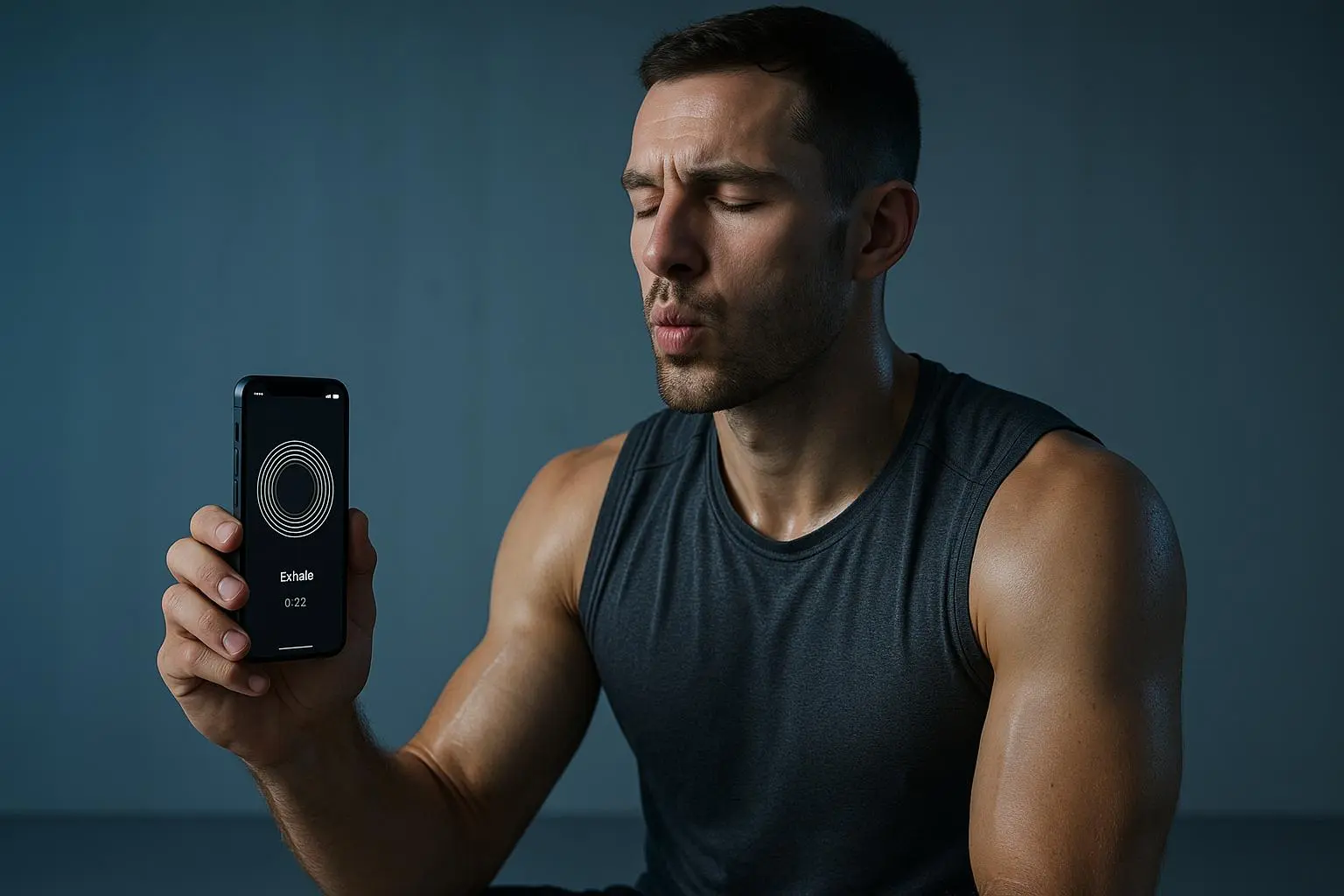
What I learned from a real, imperfect attempt I ran a tiny N-of-1 trial with a friend who’s perpetually busy. We picked coherent breathing—five breaths per minute—for 10 minutes each morning for two weeks, then swapped to box breathing for two weeks. We tracked mood, energy, and sleep, plus a morning HRV read when we remembered. The first days felt almost silly, like we were training for a slow, nerdy sport. Then it started to click. Our brains settled, our afternoons weren’t as sprint-full, and sleep felt more restorative on the mornings after a session. The data wasn’t a blockbuster; it was a quiet signal: consistency mattered more than cleverness.
A concrete plan you can steal Here’s a simple, actionable framework you can copy. It’s designed to be boringly reliable, not flashy. If you want to run it with a friend or a team, you’ll get more engagement and better data that way.
- Define your hypothesis, clearly and simply Be specific. Examples:
- “Daily 10 minutes of coherent breathing (5.5 breaths per minute) will improve my subjective sleep quality and increase my morning HRV.”
- “Practicing 4-7-8 breathing for 5 minutes before stressful meetings will reduce my perceived stress and lower my resting heart rate.”
Choose one breathing intervention to start Keep it simple. Start with coherent breathing, box breathing, or 4-7-8. One variable, two weeks, no guesswork.
Pick your metrics (the ones you’ll actually track)
- Self-reports (daily quick log):
- Mood (1-5)
- Energy (1-5)
- Perceived stress (1-5)
- Sleep quality (1-5)
- Focus/clarity (1-5)
- Objective metric:
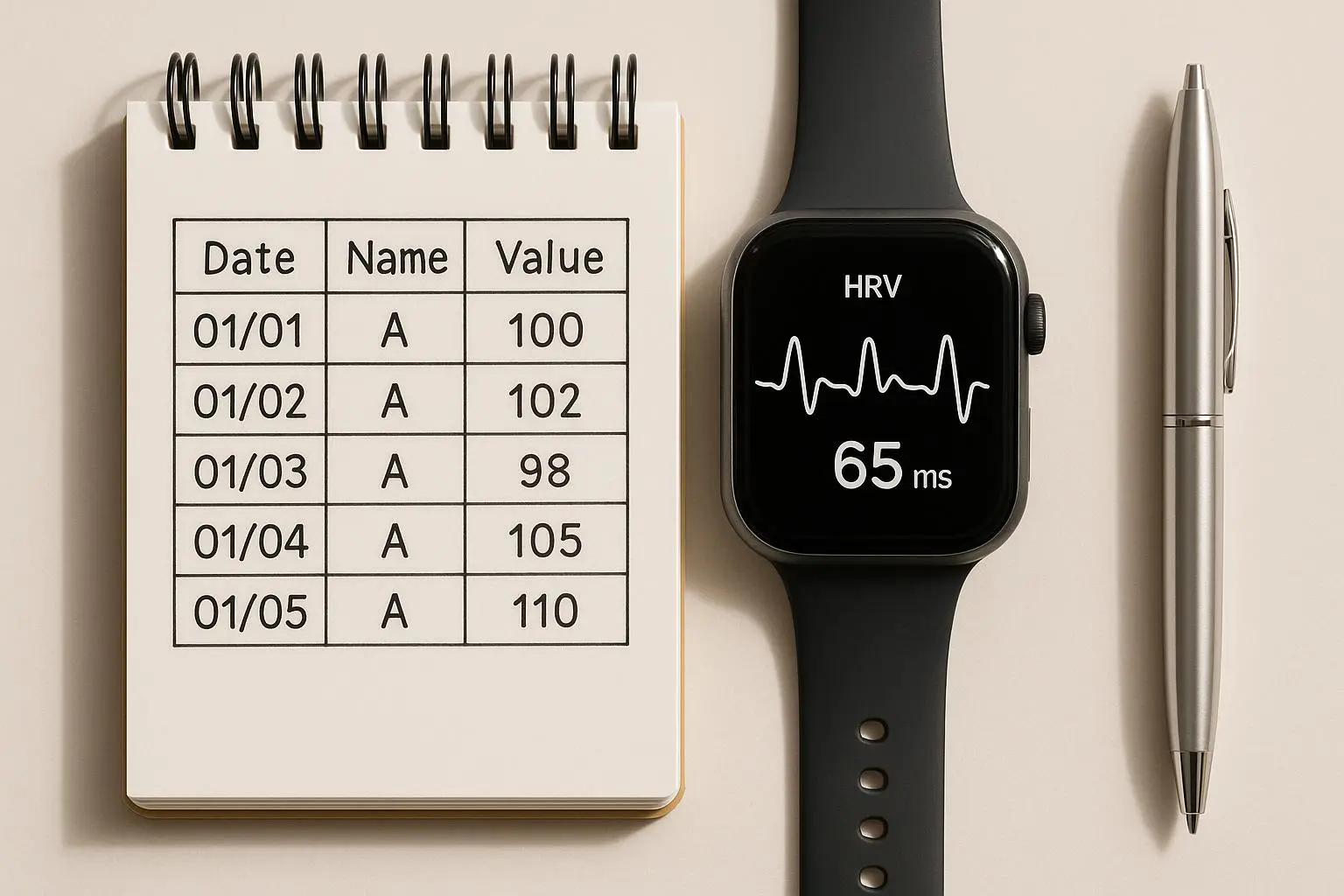
- Morning HRV (the metric most wearables give you when you wake up)
- Sleep log:
- Sleep duration (hours)
- Time to fall asleep (minutes)
- Wake-ups during the night (count)
- Get your templates ready Two CSV templates you can copy and adapt:
- daily_metrics_template.csv
- breathing_log_template.csv
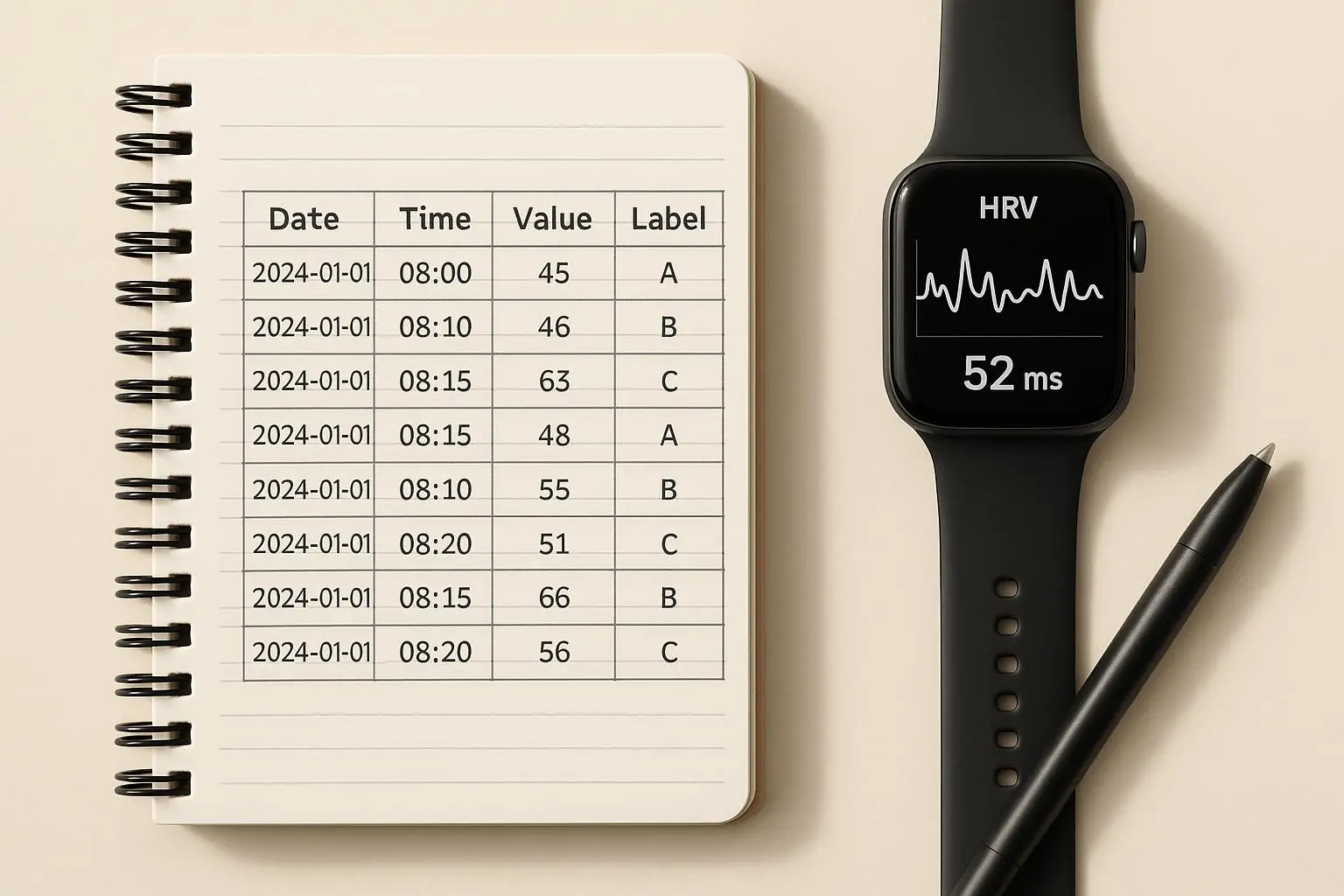
Example structure for daily_metrics_template.csv: Date,Mood,Energy,Stress,Sleep_Quality,Focus,Morning_HRV,Sleep_Duration_Hours,Wake_Ups,Time_to_Sleep_Minutes,Notes
Example structure for breathing_log_template.csv: Date,Time,Breathing_Exercise,Duration_Minutes,Pre_Session_Feeling,Post_Session_Feeling,Notes
- Design your phases (A/B style, for you)
- Baseline (Phase A): 1-2 weeks with no change to your routine. Collect daily data.
- Intervention (Phase B): 2-3 weeks with your breathing practice every day at the same time if possible. Keep collecting data.
I’ll share a quick note from a colleague that lands this home: “We did a team N-of-1 study with everyone trying a different breathing technique. It wasn’t a huge data dump, but the shared experience made the habit stick.” That combination of personal signal and a little social accountability can push you to actually show up day after day.
Running the study: getting it done without drama Consistency is the magic bullet here. Do your breathing at roughly the same part of your day, ideally first thing in the morning or right before bed. Log your data as soon as you’re done—don’t rely on memory. The act of logging becomes part of the ritual, not a separate task you dread.
Here’s how I kept it practical:
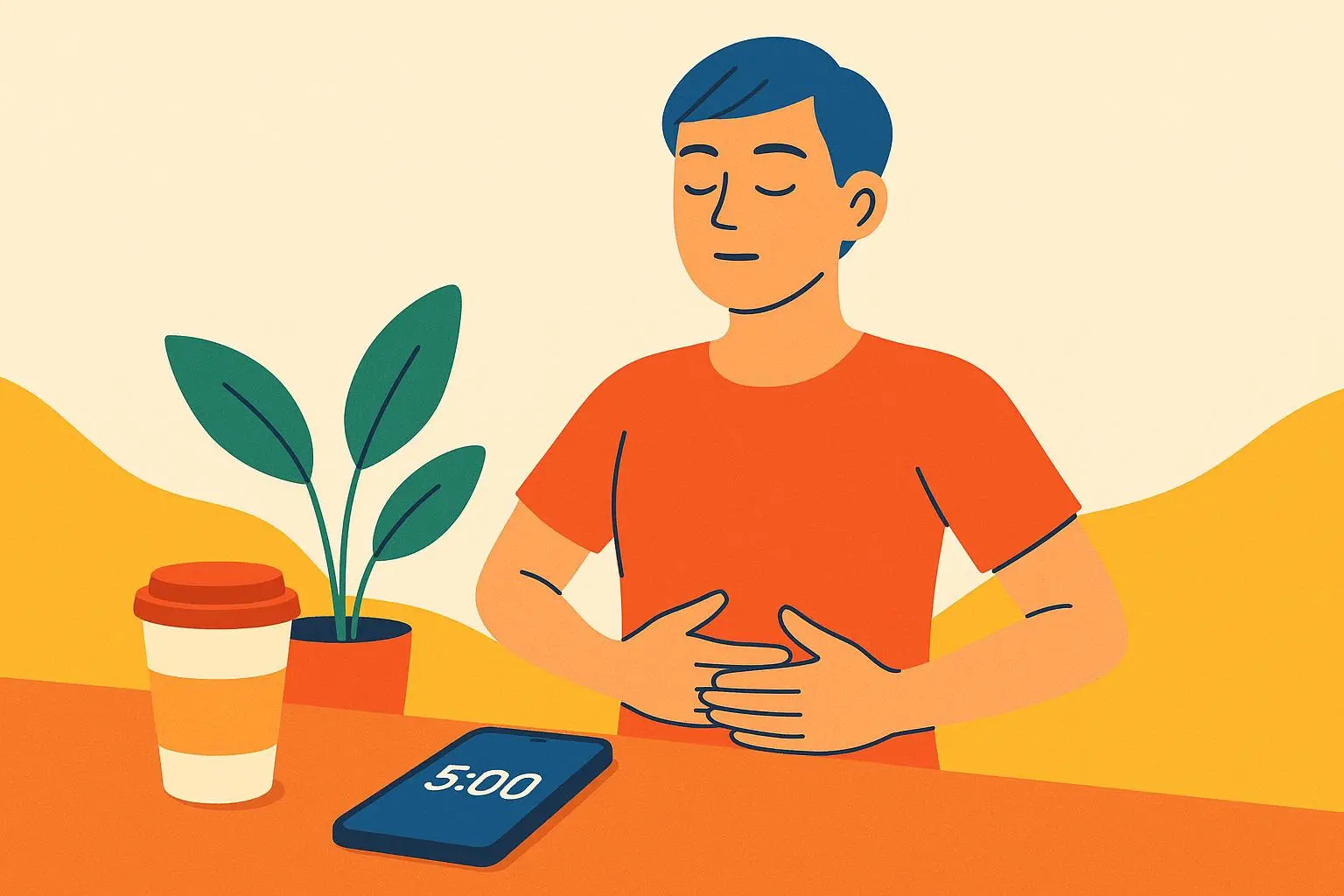
- I set a 10-minute window in the morning the moment I woke up. No phone, no emails, just breath.
- I used a single CSV for both self-report and HRV, so I didn’t juggle multiple files.
- If I missed a day, I still logged something minimal (mood and sleep) to avoid a blind spot in the trend.
A quick, real-world aside about data habits One quick detail stuck with me early on: I learned the hard way that chasing perfect HRV data can backfire. If you’re using a wearable, remember that HRV readings can bounce with things like caffeine, alcohol, or even the position you’re in when you measure it. The key is consistency over precision on any given day. That small realization saved me a lot of confusion later in the study.
How to analyze your data without needing a stats degree You don’t need complex stats to start. Open your CSV in Google Sheets or Excel and look for three things:
- Visual trends: Plot mood, energy, sleep quality, and HRV over time. Can you spot a week where the breathing practice coincides with a bump in HRV or a better sleep score?
- Averages by phase: Compare Phase A vs Phase B averages for each metric. Did your average mood or sleep quality improve in Phase B? Did HRV drift up?
- Spot-check correlations: On days you practiced, did sleep longer or feel calmer? Simple yes/no patterns can be illuminating.
A note on interpretation HRV is a nuanced metric. It’s not a perfect dial you can twist to a single outcome. Early on, you might see a dip before you see a rise as your body adapts to a new pattern. The important thing is to keep the long view and watch for consistent signals rather than chasing day-to-day noise. A thoughtful comment I captured from a forum user was, “My HRV actually went down a bit at first. Then I relaxed into the practice, and it trended upward.” That’s a perfect reminder: results aren’t always linear, but meaning emerges from the pattern over time.
What to do with your results, once you’ve got them
- If you see a positive signal: lock it in. Keep the routine, and try a longer duration or a new pattern to refine the effect.
- If you see no signal or a negative one: that’s data too. It might mean the technique isn’t the right fit for you, or you need a longer study to see a real effect. Try a different breathing pattern, adjust the duration, or shift the timing.
- If results are mixed: consider a crossover approach (A-B-A-B) in a longer run. It can help you tease apart the effect from day-to-day variability.
A real, human result you can trust During a short personal test, I found that 10 minutes of coherent breathing each morning brought more consistent focus in the late morning and improved sleep quality by a full point on my 1-5 scale on several days. It wasn’t dramatic, but the consistency mattered. The rhythm of the day felt steadier, less jagged. And the HRV data nodded along—not in a dramatic explosion, but with more morning steadiness on the days after the breathing session.
That’s the kind of signal you’re looking for: something you can actually rely on day in and day out, not a one-off spike in a graph.
Best practices and pitfalls to avoid
- Don’t overcomplicate the plan at the start. A single, well-executed intervention is better than a dozen half-measured ones.
- Don’t skip logging. Even “bad days” provide useful data. The pattern emerges when you collect consistently.
- Don’t chase perfect HRV. Use it as a guide, not a ruler. Your subjective metrics matter just as much, if not more, for everyday well-being.
- Don’t compare your results to others. The whole point is personalization. If your friend’s breathing pattern helps them sleep but yours doesn’t, that’s still useful information.
A small, practical tip you’ll thank me for later If you’re running this with a friend or team, create a shared, lightweight habit: a 2-minute daily check-in where everyone notes one line about how they feel in the morning and one line about the best part of the breathing session that day. It keeps motivation up and data collection human.
What to track beyond the basics Once you’ve nailed the basics, you can add other signals that matter to you:
- Resting heart rate (RHR)
- Sleep stages (light, deep, REM) if your device supports it
- Morning breathlessness or chest tightness if relevant
- Subjective resolution: how quickly you recover after stress or an odd day
The logistics you’ll actually use
- CSV templates: copy, adapt, and save with your own naming conventions.
- A single 10-minute breathing protocol: choose one technique and stick with it for the baseline and intervention.
- A consistent time window: aim for the same time each day if possible.
A few words about gear and tools (what worked for me)
- HRV readouts: any wearable that has HRV data will work. You don’t need the fanciest model to start; consistency beats precision.
- Data storage: Google Sheets works fine, but you can also export to CSV and run quick charts in Excel if you prefer.
- Apps: a mix of a calm breathing app for guided sessions and a log for mood and sleep can help you stay consistent without feeling overloaded.
Interpreting your journey with the numbers You’ll probably notice a few surprising things. You might find that sleep quality improves before mood, or that HRV responds to breathing before you feel calmer. That’s the kind of insight that makes the effort feel worth it. The point isn’t to prove a grand theory; it’s to learn which tiny changes compound into better days for you.
If you’re doing this with a team, celebrate small wins together. Share a chart, a takeaway, a small adjustment that helped someone move from “meh” to “pretty good.” The social element makes the habit durable.
Putting it all together: a clean start
- Define a simple hypothesis.
- Pick one breathing pattern to test.
- Use two easy metrics (self-reports and morning HRV).
- Set 1-2 weeks baseline, then 2-3 weeks intervention.
- Track daily, but keep the data collection simple.
- Review the data with an eye for patterns, not perfection.
A last thought from the frontlines of doing this A lot of people dread data collection because they fear they’ll discover they’ve been wasting time. The truth is more forgiving: even a little signal about what helps you sleep, focus, or stress can become a durable daily practice. It’s not about proving something to the world. It’s about learning something true about you.
References [1] Zaccaro, A., Piarulli, V., Laurino, M., Garbella, E., Menicucci, S., Neri, B., & Gemignani, A. (2018). How Breath-Control Can Change Your Life: A Systematic Review on Psycho-Physiological Correlates of Slow Breathing. Frontiers in Human Neuroscience, 12, 353. Retrieved from https://www.frontiersin.org/articles/10.3389/fnhum.2018.00353/full
[2] Schork, N. J. (2015). Personalized medicine: Time for one-person trials. Nature, 520(7549), 609–611. Retrieved from https://www.nature.com/articles/520609a
[3] Shaffer, F., & Ginsberg, J. P. (2017). An Overview of Heart Rate Variability Metrics and Norms. Frontiers in Public Health, 5, 258. Retrieved from https://www.frontiersin.org/articles/10.3389/fpubh.2017.00258/full
[4] Lehrer, P. M., & Gevirtz, R. (2014). Heart rate variability biofeedback: How and why does it work?. Frontiers in Psychology, 5, 756. Retrieved from https://www.frontiersin.org/articles/10.3389/fpsyg.2014.00756/full
[5] Russo, M. A., Santarelli, D. M., & O'Rourke, D. (2017). The physiological effects of slow breathing in the healthy human. Breathe, 13(4), 298–309. Retrieved from https://www.ncbi.nlm.nih.gov/pmc/articles/PMC5709795/